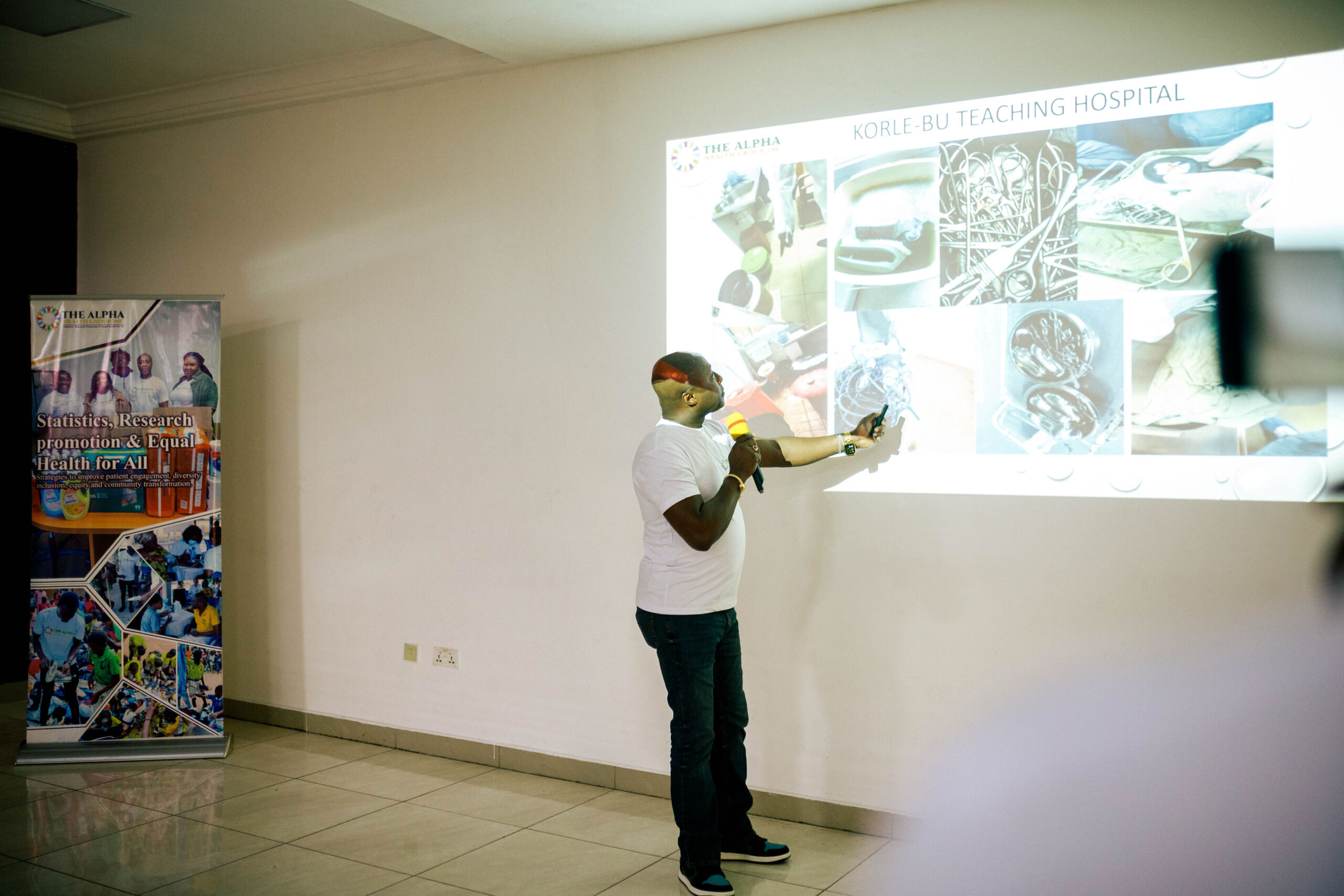
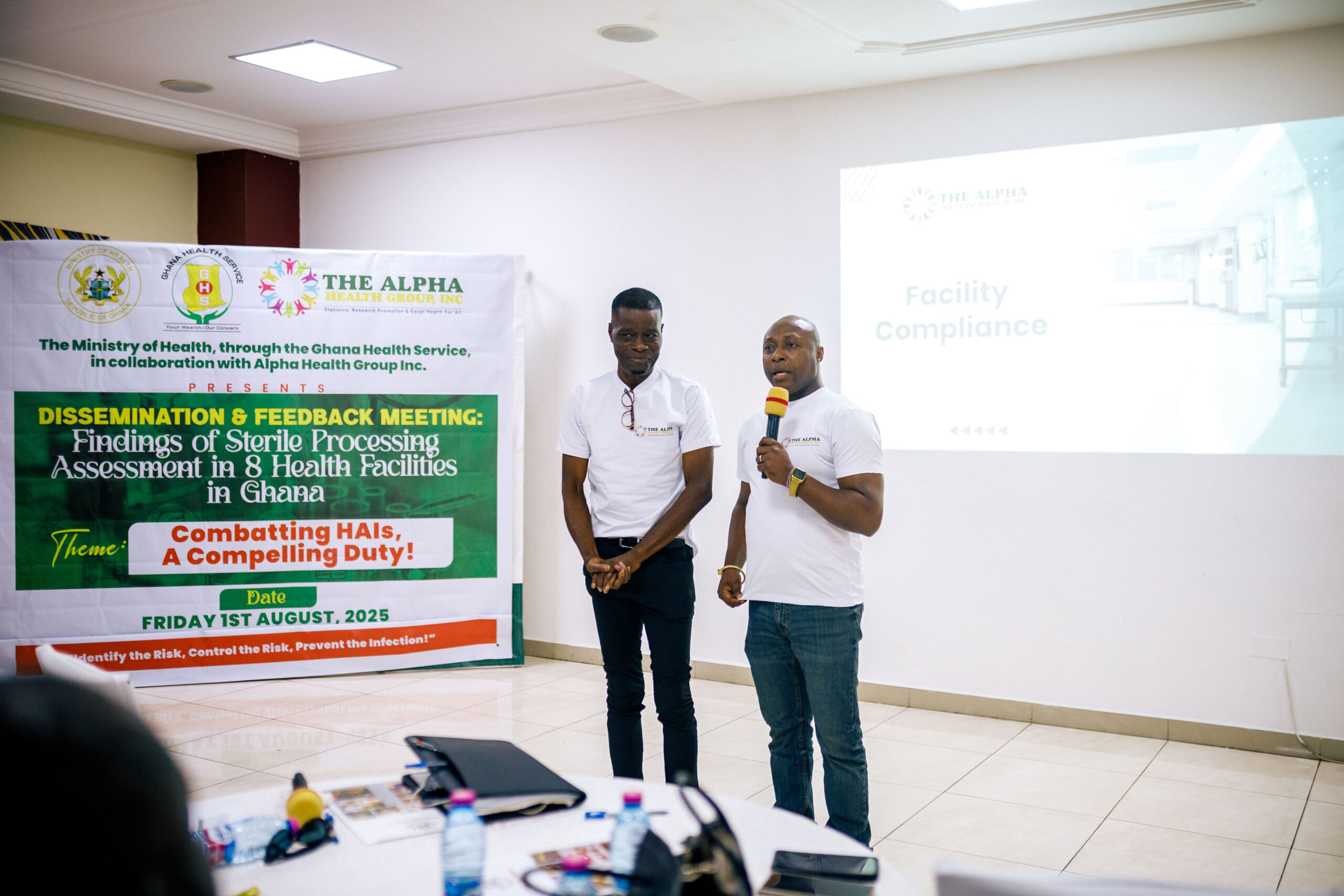
In partnership with the Ghana Health Service (GHS), The Alpha Health Group has successfully conducted and presented the findings of a baseline assessment on sterilization practices, infrastructure, and compliance with infection prevention protocols across eight (8) hospitals in the Greater Accra and Eastern Regions of Ghana.
The comprehensive assessment, carried out as part of The Alpha Health Group’s ongoing collaboration with the Ghana Health Service, examined existing decontamination and sterilization processes within healthcare facilities. The evaluation was guided by internationally recognized standards, including the American National Standards Institute/Association for the Advancement of Medical Instrumentation (ANSI/AAMI) ST79:2017 and the American Society of Heating, Refrigerating and Air-Conditioning Engineers (ASHRAE) 170 standards.
The findings highlighted key areas of progress as well as critical gaps in infrastructure, equipment maintenance, workflow design, and adherence to infection prevention and control (IPC) protocols. The assessment also underscored the urgent need for capacity building, system strengthening, and standardized practices to enhance patient and staff safety across healthcare facilities.
During the presentation, representatives from The Alpha Health Group emphasized that improving sterilization and decontamination practices is a cornerstone of quality healthcare delivery and infection prevention. “Our mission is to support healthcare institutions in building safe, resilient, and efficient sterilization systems that meet international standards,” they stated.
The Ghana Health Service commended The Alpha Health Group for its technical expertise and dedication to strengthening the nation’s healthcare system. Both organizations reaffirmed their commitment to implementing the recommendations from the study to ensure continuous improvement in healthcare quality and patient safety.
This initiative forms part of The Alpha Health Group’s broader mandate to advance public health, health equity, and sustainable healthcare practices through evidence-based interventions and global partnerships.